
 Pin it
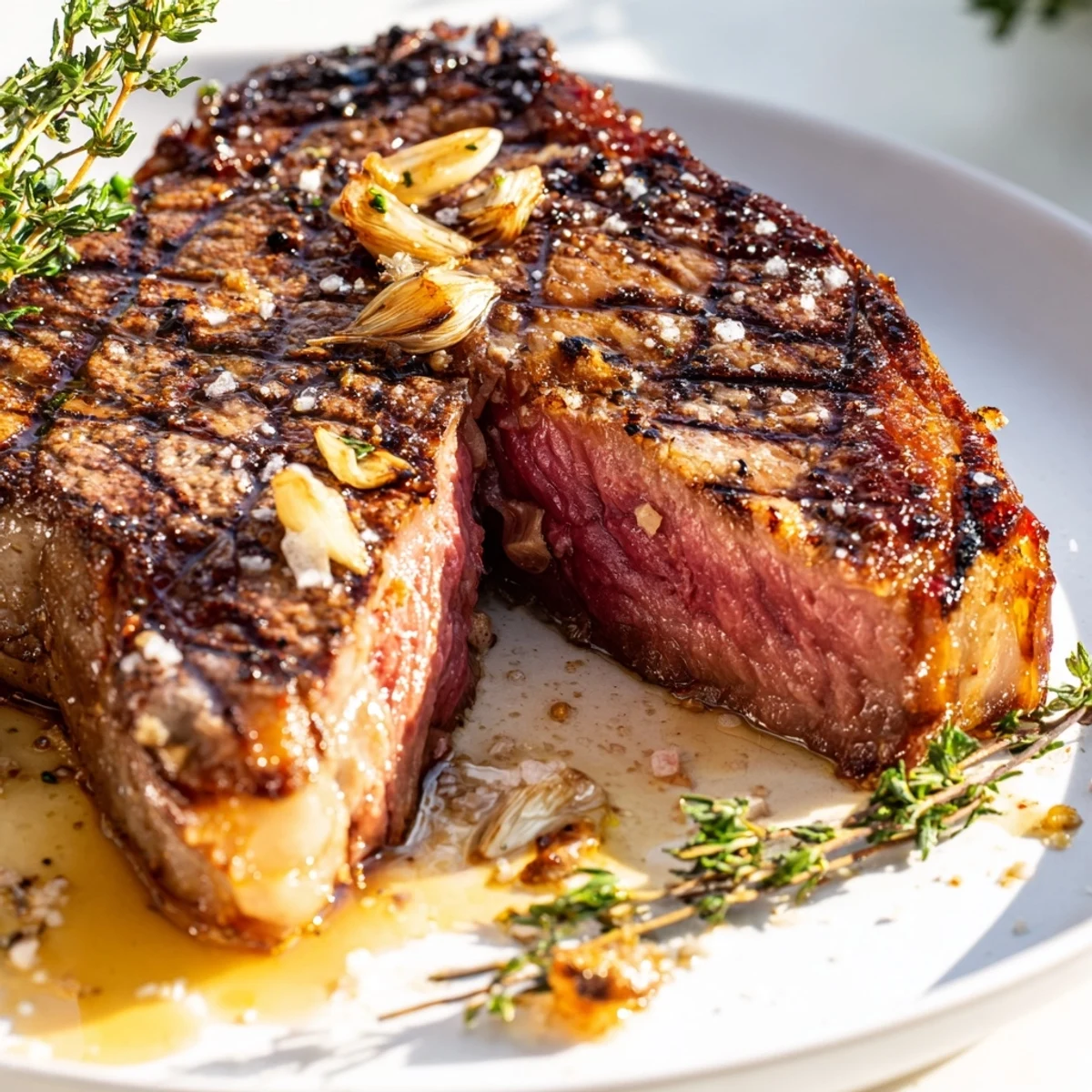
 Create a restaurant-quality ribeye steak with a deeply caramelized exterior and tender, juicy center. The stovetop method uses high heat to develop a golden crust, then finishes with aromatic butter, garlic, and fresh herbs for incredible flavor. Ready in just 20 minutes, this technique delivers consistent results every time.
The sound of a ribeye hitting a smoking hot cast iron skillet is something that stopped me in my tracks the first time I heard it, that perfect sizzle that promises restaurant quality results at home. My husband and I had just returned from our honeymoon with a determination to learn to cook the steaks we had been ordering out for years, and there is something almost meditative about standing over the stove, watching the crust develop, knowing you are creating something special.
I once made these steaks for my fathers birthday, standing at the stove while everyone else gathered in the living room, the smell of garlic and rosemary butter wafting through the house. When I finally brought those perfectly seared ribeyes to the table, my dad took one bite and told me it was better than any steakhouse dinner he had ever had.
Ingredients
- Ribeye steaks (about 1 inch thick): The marbling in ribeye melts during cooking, creating natural tenderness and rich flavor that other cuts cannot match.
- Kosher salt: Coarse salt adheres better to the meat surface and seasons more evenly than table salt.
- Freshly ground black pepper: Whole peppercorns ground right before cooking release oils that pre-ground pepper loses over time.
- High heat oil: Canola, grapeseed, or avocado oil have high smoke points that prevent burning during the initial sear.
- Unsalted butter: Butter burns at high heat, so add it after the initial sear for basting and flavor.
- Smashed garlic cloves: Smashing releases more oils than mincing, infusing the butter with intense garlic flavor.
- Fresh thyme and rosemary: These woody herbs hold up to high heat better than delicate herbs like basil or parsley.
Instructions
- Bring steaks to room temperature:
- Remove the steaks from the refrigerator 30 minutes before cooking and pat them completely dry with paper towels. Cold meat cooks unevenly and creates excess steam that prevents proper crust formation.
- Season generously:
- Sprinkle salt and pepper liberally on both sides of the steaks, pressing the seasoning into the meat to help it adhere.
- Heat the skillet:
- Heat a large cast iron skillet over high heat until it is very hot, then add the oil and swirl to coat the bottom of the pan. The oil should shimmer but not smoke when you add the meat.
- Sear the first side:
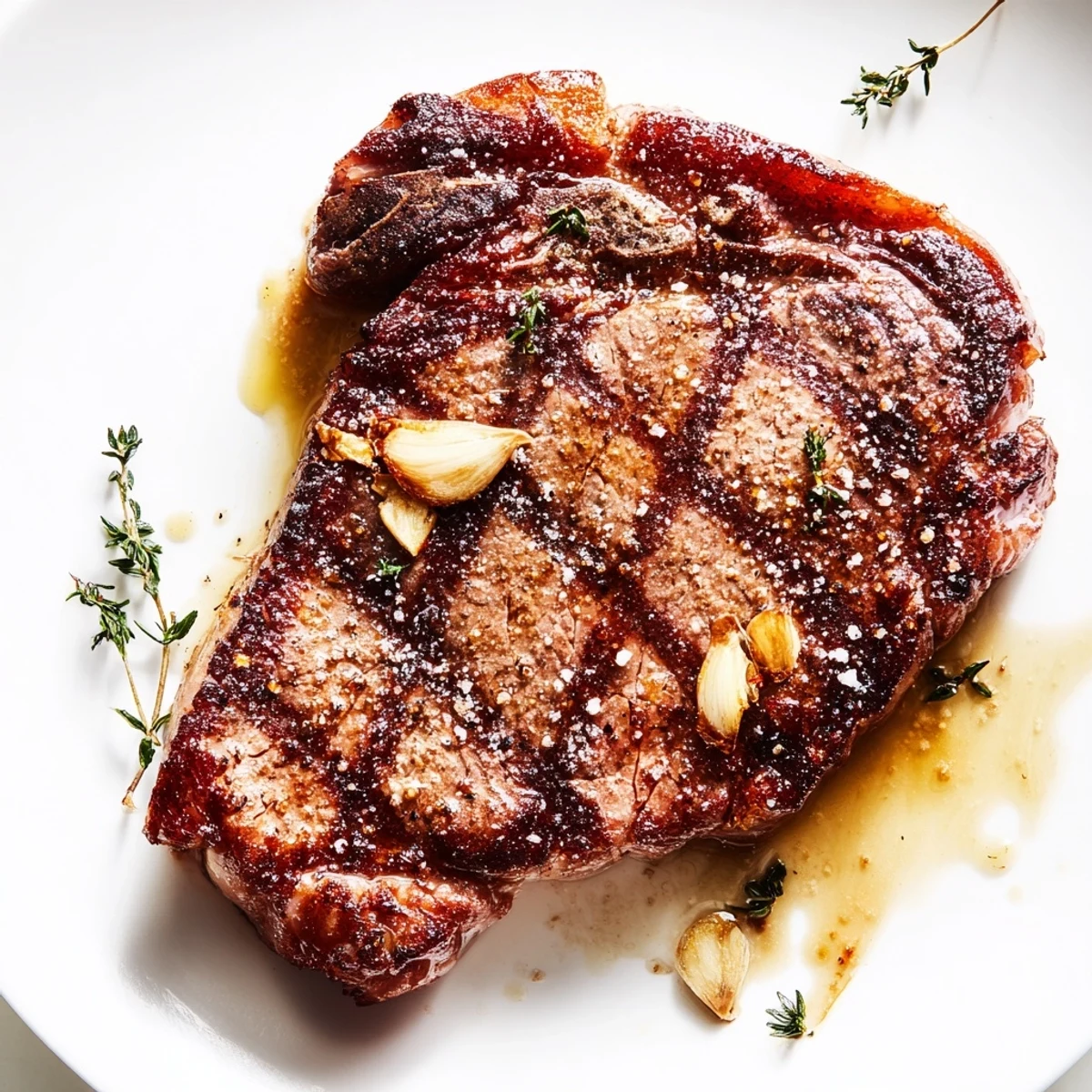
- Place the steaks in the hot skillet and let them sear without moving for 2 to 3 minutes until a deep golden crust forms. Resisting the urge to move the meat ensures even browning.
- Flip and add aromatics:
- Flip the steaks and immediately add butter, smashed garlic, thyme, and rosemary to the pan. The butter will foam and melt, creating a basting liquid.
- Baste to finish:
- Tilt the skillet toward you and spoon the melted butter and aromatics over the steaks continuously for 2 to 3 minutes, cooking until the meat reaches your desired doneness. Use a meat thermometer for precision, 125 degrees F for rare, 135 degrees F for medium rare, or 145 degrees F for medium.
- Rest before serving:
- Transfer the steaks to a cutting board and let them rest for 5 minutes before slicing and serving. This crucial step allows the juices to redistribute throughout the meat.
 Pin it
 These ribeyes have become our anniversary tradition, the same meal I made that first year of marriage when we were learning to cook together. Something about standing at the stove, basting steaks with garlic butter, feels like a celebration in itself.
Choosing the Right Cut
Look for ribeyes with abundant marbling throughout the meat, as those white streaks of fat will melt during cooking and create tenderness. Prime grade beef offers the most marbling, but choice grade works beautifully when you are cooking at home with the right technique.
Perfecting the Sear
Preheat your skillet for at least 5 minutes over high heat, and do not be afraid of a little smoke. A properly hot pan creates that restaurant quality crust that seals in juices and creates textural contrast against the tender interior.
Serving Suggestions
Letting the steaks rest on a warm plate rather than a cold cutting board helps maintain the temperature while the juices redistribute. A final sprinkle of flaky sea salt right before serving adds texture and bright pops of salinity.
- Roasted potatoes with rosemary complement the herbal notes in the basting butter
- A simple arugula salad with lemon vinaigrette cuts through the richness
- Red wine reduction sauce makes use of the fond left in the pan
 Pin it
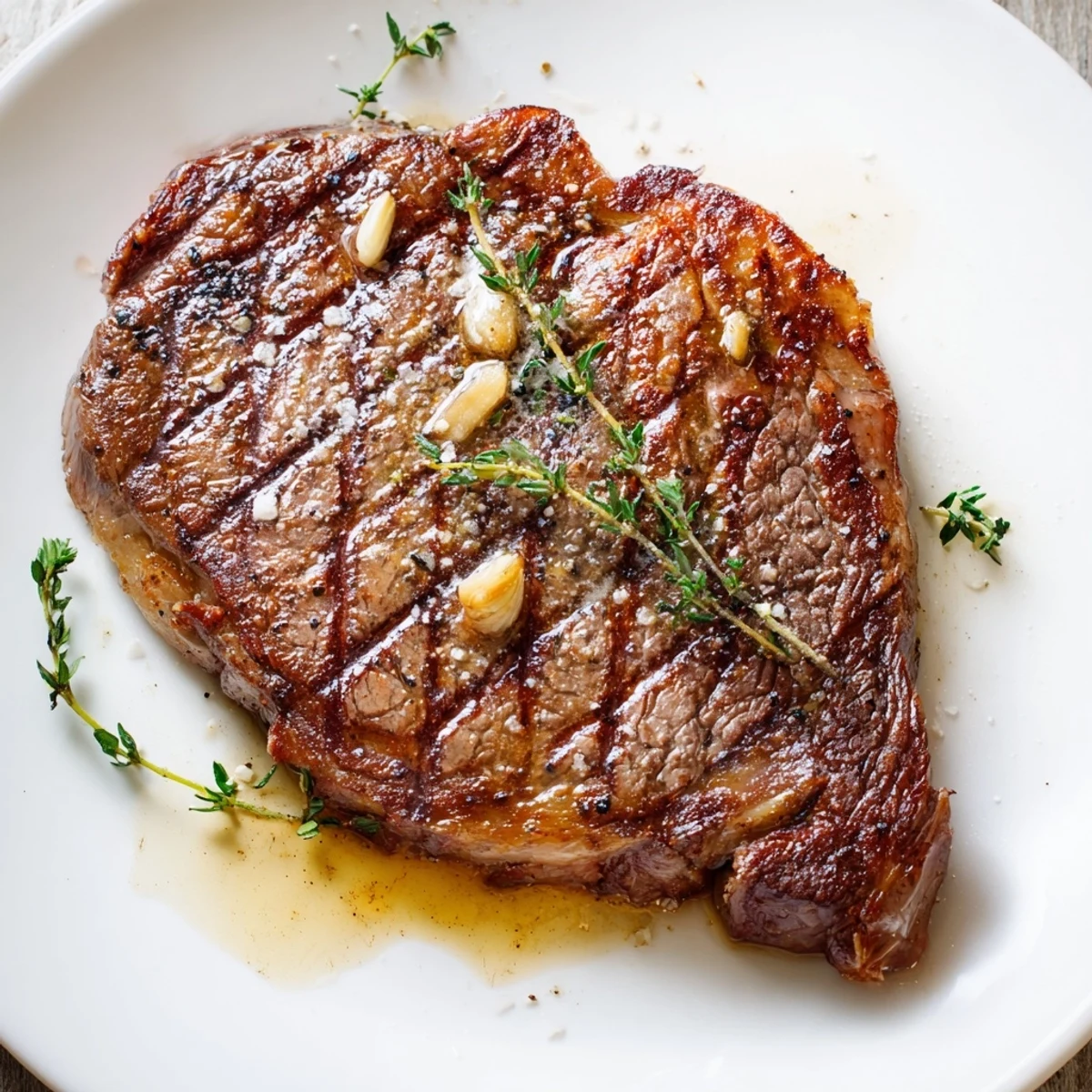
 There is something deeply satisfying about cooking a perfect steak at home, a reminder that simple ingredients and solid technique can create something extraordinary.
Recipe FAQs
- → What temperature should ribeye be cooked to?
-
For optimal results, aim for 125°F for rare, 135°F for medium-rare, or 145°F for medium. Use a meat thermometer to check doneness.
- → Why let steak rest before serving?
-
Resting allows juices to redistribute throughout the meat, ensuring each bite remains tender and flavorful rather than losing moisture when cut.
- → Can I use a different cut of beef?
-
While ribeye offers excellent marbling and flavor, this method works well with New York strip, sirloin, or filet mignon. Adjust cooking time based on thickness.
- → What if I don't have a cast-iron skillet?
-
A heavy stainless steel pan works as an alternative. The key is using a pan that retains high heat well to achieve proper searing.
- → How do I know when the crust is formed?
-
Wait 2-3 minutes without moving the steak. When a deep golden-brown crust develops and the steak releases easily from the pan, it's ready to flip.