
 Pin it
 Create luxurious Greek yogurt at home using whole milk and a starter culture. The process involves heating milk to specific temperatures, adding live cultures, and allowing time for fermentation. After culturing, strain the yogurt through cheesecloth to achieve that signature thick, creamy texture Greek yogurt is known for. This method yields approximately four cups of versatile yogurt perfect for breakfast bowls, smoothies, baking, or enjoying plain with a drizzle of honey.
The first time I made homemade yogurt, I kept checking the pot every twenty minutes like an anxious parent. When I finally lifted the towel after eight hours and saw that perfect, wobbly set, I felt ridiculous for being so excited about fermented milk. Now I make a batch every Sunday while catching up on podcasts, and the ritual has become one of those small kitchen moments that anchors my week.
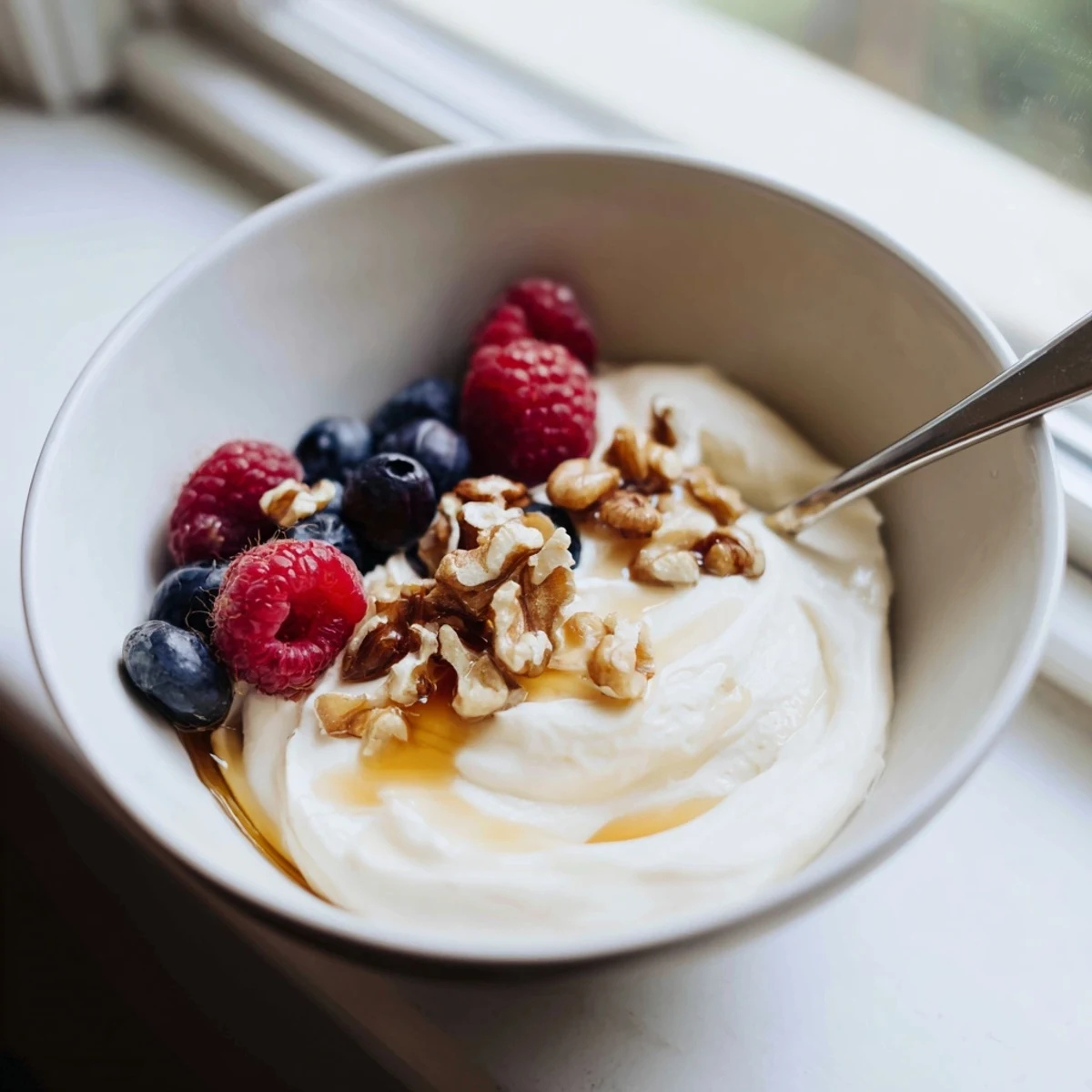
My friend Alex stayed over last winter and I served her yogurt topped with honey from my neighbors hive and walnuts toasted in brown butter. She ate three bowls and asked if she could take some home, which is how I learned that homemade yogurt makes the best host gift. The whey I collected went into her morning smoothie, and now she texts me photos whenever she strains a new batch.
Ingredients
- 1 liter whole milk: The higher fat content creates that velvety texture we associate with Greek yogurt, though I have used 2% in a pinch
- 2 tablespoons plain yogurt with live cultures: This is your starter, the microscopic alchemy that transforms milk into yogurt, so check the label carefully for those words live and active
Instructions
- Heat the milk gently:
- Pour the milk into your saucepan and set it over medium heat, stirring occasionally with a heat proof spatula to prevent a skin from forming on the bottom. Watch the temperature climb until it hits 180F, which kills any bacteria that might compete with your yogurt cultures.
- Let it cool down:
- Remove the pan from the heat and let the milk cool until your thermometer reads 110F, which feels pleasantly warm to the touch like a perfect bath. I usually clean my workspace during this wait since patience is not my strong suit.
- Make your starter:
- Whisk those 2 tablespoons of yogurt with about 1/4 cup of the cooled milk in a small bowl until completely smooth. This step ensures the starter incorporates evenly into the larger batch.
- Combine everything:
- Pour the starter mixture back into the saucepan with the rest of the cooled milk, whisking gently but thoroughly. Transfer the whole thing to a clean glass jar or the container you will incubate it in.
- Let the magic happen:
- Cover your container and wrap it in a thick towel, or place it in a yogurt maker if you are feeling fancy. Let it sit undisturbed for 6 to 8 hours in the warmest spot in your kitchen, which for me is the back of the microwave.
- Strain for thickness:
- Line a mesh strainer with cheesecloth and set it over a bowl to catch the liquid whey. Pour in your set yogurt and refrigerate it for 1 to 2 hours depending on how thick you like it.
- Store and enjoy:
- Transfer your strained Greek yogurt to a clean container and keep it refrigerated. It will keep for about two weeks, though mine never lasts that long.
 Pin it
 Last summer I made this yogurt during a heat wave when my kitchen stayed around 85F, and it cultured faster than ever before. The texture was almost like cream cheese, thick enough to stand a spoon up in, which taught me that temperature variations are part of the charm of homemade fermentation.
Milk Matters
I have experimented with goat milk for its distinctive tang and sheep milk when I am feeling particularly indulgent. Each milk brings its own personality to the final yogurt, though whole cow milk remains my everyday standard for that familiar creamy taste we all recognize.
Flavor Your Batch
While the plain yogurt is endlessly versatile, I sometimes stir in vanilla bean paste and a drizzle of maple syrup right before serving. The trick is adding these flavors after straining so the sweeteners do not interfere with the culturing process.
Do Not Waste The Whey
That tangy yellow liquid draining into your bowl is full of protein and probiotics, so I started collecting it in a jar for smoothies and overnight oats. It also works beautifully in place of buttermilk in pancake recipes, adding a subtle tang that makes breakfast feel special.
- Whisk whey into salad dressings for extra protein and a bright acidic note
- Use it to soak grains before cooking for better digestion and fluffier results
- Add it to bread dough or pizza dough for a tender crumb and slight tang
 Pin it
 There is something deeply satisfying about making a food most people only buy in plastic tubs at the grocery store. Once you taste your first spoonful, still warm from the culturing process, you will understand why yogurt making has been practiced for thousands of years.
Recipe FAQs
- → What makes Greek yogurt different from regular yogurt?
-
Greek yogurt undergoes straining to remove whey, resulting in a thicker, creamier texture with higher protein content compared to regular yogurt.
- → How long does homemade yogurt last?
-
Properly stored in the refrigerator, homemade yogurt stays fresh for up to two weeks. Keep it in a sealed container and use clean utensils when serving.
- → Can I use low-fat milk instead of whole milk?
-
While possible, whole milk produces the creamiest results. Low-fat versions will be less rich and may yield a thinner consistency even after straining.
- → What can I do with the whey after straining?
-
The strained whey contains protein and beneficial nutrients. Use it in smoothies, baking bread, or as a liquid substitute in pancake and muffin batter.
- → Do I need a yogurt maker?
-
No special equipment is required. A warm spot in your kitchen, oven with the light on, or wrapping the container in towels works perfectly for maintaining culturing temperature.